


FOMO in Trading How to Beat Dopamine Driven Chasing and Wait for Structured Setups
The most dangerous trade often starts with a green candle you did not catch.
Price is ripping. The chart looks vertical. Other traders seem to be celebrating. Your plan says nothing about entering here, but your body says, “Get in now or miss it.” That feeling is FOMO, and it is not just a weak mindset. It is a nervous system response.
FOMO in trading combines reward anticipation, regret, social comparison, and urgency. If you do not have rules ready before it appears, it can push you into late entries, oversized positions, ignored stops, and revenge trades after the pullback comes.
This guide explains what happens in the brain when an asset rockets without you, then gives a practical checklist to stop chasing and wait for structured setups.
This article is for educational purposes only. It is not financial advice.
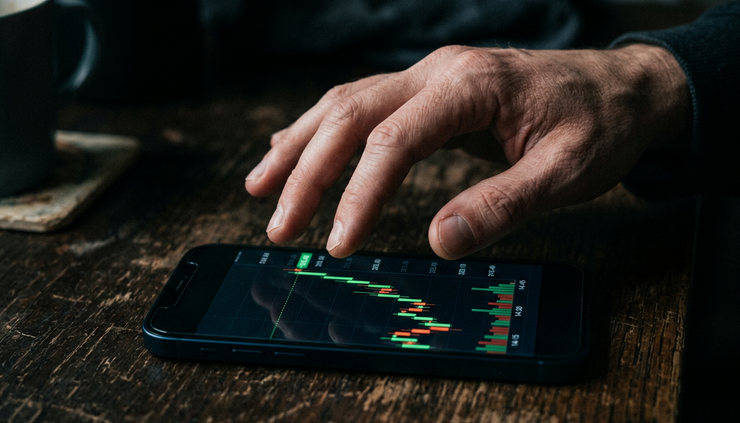
Why FOMO feels so powerful when price runs without you
FOMO is not only fear. It is a mix of desire and pain.
When an asset rises sharply, the brain sees a potential reward. Dopamine, a neurotransmitter involved in motivation and reward learning, helps tag that opportunity as important. It does not simply create pleasure. It pushes you to act, seek, click, refresh, and chase.
A missed move creates a specific mental trap:
The chart shows proof that money could have been made.
The brain compares the current price with the earlier price.
Regret appears before any actual loss has happened.
Urgency builds because the opportunity seems to be disappearing.
That combination can make a late entry feel rational. The mind starts building a story.
“If it has gone this far, it must be strong.”
“I will just take a quick scalp.”
“I can get out if it turns.”
“I cannot let this run without me.”
The problem is that chasing usually happens after the clean risk-to-reward has gone. The entry is late. The stop is unclear. The position size is emotional. The trade is no longer based on structure, it is based on relief. Buying becomes a way to end discomfort.
That is why learning how to stop FOMO trading starts before the candle appears. You need rules that interrupt the dopamine loop while it is happening.
The dopamine loop behind market chasing
A strong move activates several psychological triggers at once. Knowing them does not remove the urge, but it gives you a name for it. Naming the pattern creates space between impulse and action.
The reward prediction error makes the move feel urgent
The brain reacts strongly when something is better than expected. If a stock, index, cryptoasset, or currency pair suddenly breaks out, the move can feel like a surprise reward.
That surprise matters. Dopamine activity tends to increase when the brain detects a possible reward that exceeds expectation. In trading, the chart becomes a signal that says, “There may be more here.”
The danger is that the brain often treats “moving fast” as the same as “good opportunity”. They are not the same.
A clean opportunity has:
A defined setup
A clear invalidation point
A planned entry
A sensible position size
A realistic target
A fast move only has speed.
Variable rewards make markets addictive
Markets do not pay out on a fixed schedule. Sometimes a chase works. Sometimes it fails at once. Sometimes it works briefly, then reverses. This unpredictable reward pattern is powerful because the brain keeps checking for the next win.
That is why one successful chase can damage discipline for weeks. The brain stores the memory as evidence.
“Last time I jumped in late, it worked.”
The mind forgets the ten bad chases and remembers the one dramatic save. This is selective memory, and it is expensive.
Social proof adds pressure
Even without looking at social media, market movement itself creates social pressure. A huge green candle implies that many others are already in. Volume expands. Headlines appear. Chat groups light up. It feels as if a crowd has discovered something and you are outside the door.
Humans are wired to notice group behaviour. In markets, that instinct can become dangerous because the crowd may already be late too.
The trade must stand on your rules, not on the noise around it.
Regret turns into urgency
Missed profit can feel like a real loss. This is one reason FOMO feels so uncomfortable. Your account balance has not changed, but your mind is already comparing your actual result with an imagined result.
That imagined profit becomes a psychological anchor.
If the asset was £10 and now it is £12, the mind says, “I missed £2 per share.” That comparison creates pressure to earn it back immediately. The result is often a worse trade at a worse price.

The hidden cost of buying late
A late FOMO entry hurts in more ways than one. The obvious cost is money. The deeper cost is behavioural.
When you buy late, you often inherit the risk that early traders are trying to reduce. They bought near structure. You buy near excitement. They may be scaling out while you are starting.
That creates three problems.
Your stop gets wider or weaker
If the nearest logical invalidation point is far below entry, the trade may no longer fit your risk limit. Many traders respond by placing a tight random stop.
That stop is not based on structure. It is based on discomfort. Price only needs a normal pullback to hit it.
The other option is worse: no stop, or a stop that keeps moving. Now the trade has changed from a planned risk into an open-ended hope.
Your target becomes emotional
A structured trade can define a target before entry. A FOMO trade often invents the target afterwards.
You enter because price is moving. Then, once in, you need another burst of price movement to justify the entry. If price stalls, frustration appears. If it pulls back, panic appears. If it moves slightly in profit, greed appears.
The trade becomes hard to manage because there was no proper trade idea in the first place.
Your brain learns the wrong lesson
Every impulsive trade trains a habit. Even if the trade makes money, the brain learns:
Urgency can replace planning.
Discomfort can be solved by clicking buy.
Rules are optional when price moves fast.
This is why emotional discipline stock market work matters. An impulsive trading habits fix is not only about stopping one bad entry. It is about breaking the link between discomfort and execution. Some traders call this trading mindset optimization, but plain language is better: build rules that protect you from yourself when you are most excited.
A rules-based checklist to stop chasing
A checklist works because it shifts the decision from emotion to process. It also slows you down. That pause matters.
Use this before every trade that feels urgent.
The FOMO interruption checklist
Rule | Question to answer before entry | If the answer is no |
Setup exists | Is this one of my written setups? | Do not trade |
Entry level is planned | Did I identify this entry before the candle took off? | Wait for a pullback or reset |
Risk is defined | Do I know exactly where the trade is wrong? | Do not trade |
Reward is still acceptable | Is the likely reward at least worth the risk under my plan? | Pass |
Position size is fixed | Have I sized the trade based on my stop, not my excitement? | Reduce or skip |
Candle is closed | Has the breakout candle closed, or am I reacting mid-candle? | Wait |
No revenge motive | Am I trying to recover a missed move or recent loss? | Step away |
Time pause completed | Have I waited at least one full decision cycle? | Start the timer |
The final rule is the most practical. A “decision cycle” can be:
5 minutes for very short-term traders
15 to 30 minutes for intraday traders
One candle close for swing traders
One daily close for position traders
The exact time matters less than the rule. You are training the brain to tolerate the urge without obeying it.
The three-door rule
When price has already moved, you only have three valid choices.
Door one
Wait for a pullback into a planned area.
Door two
Wait for consolidation and a new breakout from structure.
Door three
Do nothing and log the missed trade.
There is no fourth door called “buy because it is going up”.
This simple rule removes debate. If the move is real, the market will often create another structure. If it never gives another entry, that is fine. The goal is not to catch every move. The goal is to survive long enough to catch the moves that fit your edge.

How to define a structured setup before the market tests you
A structured setup is not a prediction. It is a repeatable condition that tells you when risk is clear enough to act.
If your setup cannot be written down, it is probably too vague.
A useful setup definition includes five parts.
Market context
Decide what background you need. For example:
Price is in an uptrend and pulling back.
Price is breaking from a tight range.
Price is reclaiming a key level after a failed breakdown.
Price is reacting at a prior support or resistance area.
Context stops you from treating every green candle as equal.
Trigger
The trigger is the exact event that allows entry.
Examples include:
A candle close above resistance
A pullback to a moving average with a bullish rejection candle
A break and retest of a prior level
A higher low forming after a breakout
A range breakout with volume expansion
Your trigger should be visible on the chart. “It feels strong” is not a trigger.
Invalidation
Before entry, answer this:
“At what price is my trade idea wrong?”
That level should come from market structure, not from how much pain you can tolerate. If invalidation is too far away, reduce size or skip the trade.
Target area
A target does not need to be perfect. It should be reasonable.
Possible target areas include:
Prior highs
Measured range levels
Supply or resistance zones
A fixed risk multiple under your plan
A trailing method if your strategy uses one
The key is to define management before the emotional stress begins.
Position size
Position size should come last. Many FOMO trades start with size because excitement comes first.
A better order is:
Find the setup.
Define the entry.
Define the stop.
Calculate the risk.
Size the position.
If the correct size feels too small, that may mean you are seeking excitement rather than a clean trade.
Build a FOMO protocol for live markets
A protocol is a set of actions you run when the urge appears. It should be simple enough to use while stressed.
Step one is to label the state
Say or write:
“This is FOMO. I am feeling urgency because price moved without me.”
That sentence reduces the spell. You stop treating the urge as a command and start treating it as a signal.
Step two is to remove the buy button for a set time
Do not stare at the order ticket while trying to be disciplined. Close it. Stand up if needed. Set a timer.
During the timer, you may only do three things:
Mark the nearest support and resistance.
Write the setup that would justify entry.
Calculate the entry, stop, and target if structure forms.
You may not place a trade during the timer.
Step three is to score the trade
Use a simple scorecard. Give one point for each condition.
Condition | Point |
Setup matches the written playbook | 1 |
Entry is not more than your allowed distance from the trigger | 1 |
Stop is at a clear invalidation level | 1 |
Reward-to-risk meets your minimum | 1 |
Position size follows your rules | 1 |
You are calm enough to accept a loss | 1 |
Set a minimum score. For example, no trade below 5 out of 6.
The last condition matters. If a normal loss would make you angry, desperate, or tempted to double down, the trade is too emotionally loaded.
Step four is to decide in writing
Before entry, write one sentence:
“I am taking this trade because…”
If the sentence includes any of these phrases, skip it:
“I do not want to miss it”
“It has to keep going”
“Everyone is watching it”
“I can make back what I missed”
“I will just be quick”
Those are not trade reasons. They are emotional pressure in disguise.

What to do after a missed move
Missing a winning trade feels bad, but it is not an error by itself. A missed move only becomes a problem when it causes a second bad decision.
Treat every missed move as data.
Create a section in your journal called `Missed but managed`. Log the trade even though you did not take it.
Record:
What the asset was
What the setup looked like before the move
Whether it was in your playbook
Whether there was a valid entry
What you felt when it moved
What rule kept you out
Whether a later structured entry appeared
This turns regret into training.
You will often discover one of two things. Either the trade was never yours, or it was yours but you lacked an alert, routine, or preparation. Both answers are useful.
If it was never your setup, passing was success.
If it was your setup but you missed it, improve the process. Set alerts. Build a watchlist. Review at set times. Do not punish yourself by buying late.
The trader’s anti-FOMO rules
Use these rules as a starting point. Adapt them to your timeframe and strategy, but keep them written.
Rule one
No entry after a vertical move unless a fresh structure forms.
Rule two
No trade without a written stop before entry.
Rule three
No position size increase because of confidence, anger, or regret.
Rule four
No buying during the first emotional spike. Wait for the chosen candle close or timer.
Rule five
No trade if the reason cannot be explained in one calm sentence.
Rule six
No chasing to recover imaginary missed profit.
Rule seven
Every missed move gets logged, not avenged.
These rules will feel restrictive at first. That is the point. FOMO wants freedom without structure. Good trading needs freedom inside structure.
The real goal is not to eliminate FOMO
You will still feel FOMO. The aim is not to become emotionless. The aim is to stop treating emotion as an execution signal.
A skilled trader can watch an asset run without being in it and still say, “Not my setup.” That sentence is powerful. It protects capital. It protects confidence. It protects tomorrow’s decision-making.
The next time a chart goes vertical, do not ask, “How do I get in?”
Ask:
“Where was the planned entry?”
“Where is the next structure?”
“What would make this trade invalid?”
“Am I acting from a setup or from discomfort?”
If the trade is real, it can survive your checklist. If it cannot survive your checklist, it was probably not a trade. It was dopamine with a candlestick attached.


Comments